Police, Venue, or Online Platform: Where Should You Report a Lost Item First?

Kevin Hall
Apr 12th, 2026
·10min read
Apr 12th, 2026
·10min read
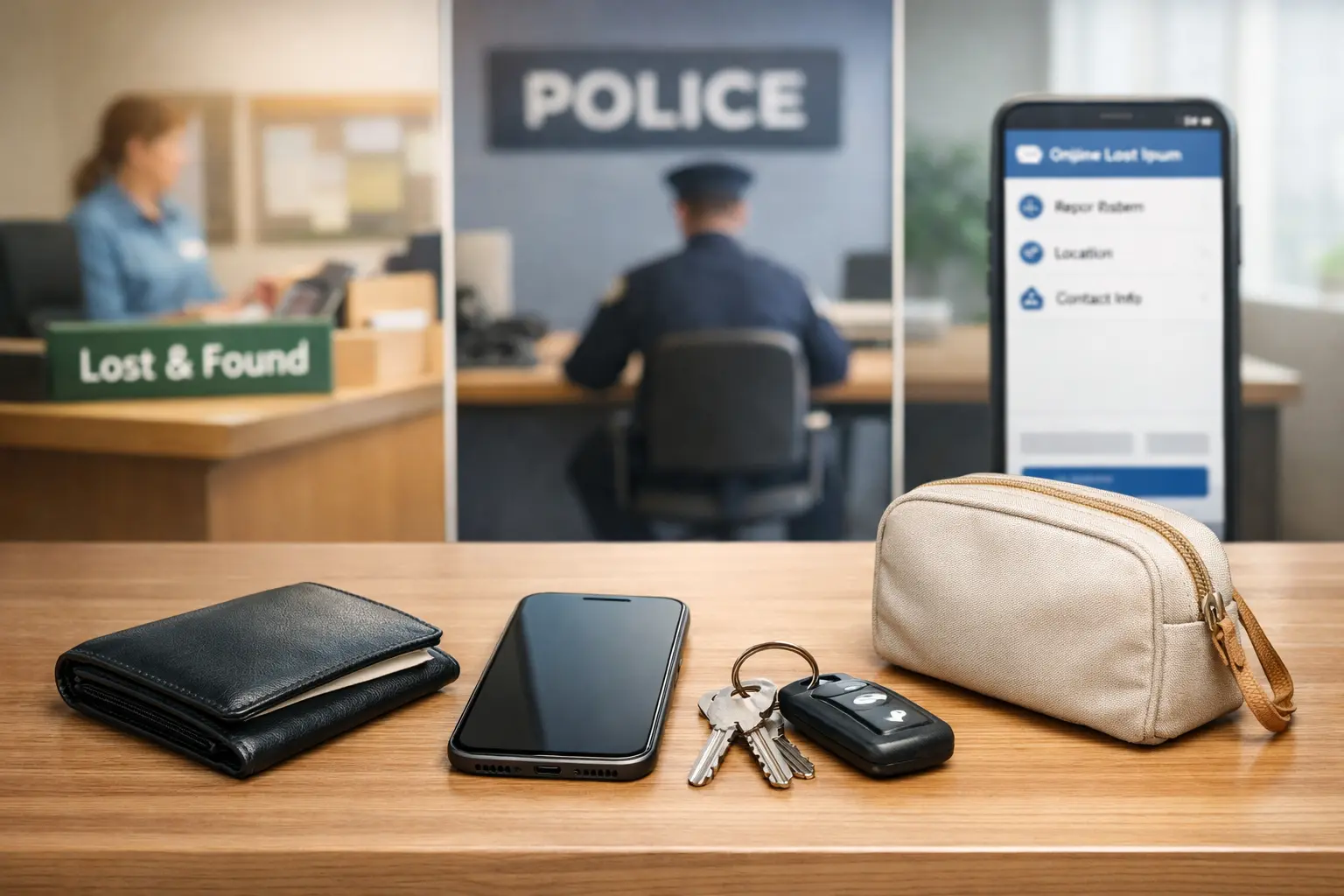
If you want the short answer first, use this:
Most people lose time because they treat every lost item like the same problem.
It is not.
A phone left on a restaurant table, a wallet dropped on a public street, a passport missing after airport security, and keys that may have been picked up in a gym changing room do not belong in the same reporting route.
The right first report depends on one question:
Who most likely controlled the item after you lost it?
This guide explains how to choose between police, a venue or operator, and an online platform so you can route the report correctly and improve your chances of getting the item back.
When people ask where to report a lost item first, they often focus on the object:
That matters, but the first decision is usually about the loss environment, not the object itself.
Ask:
Those answers point to the first report channel much more reliably than the item type alone.
For example:
If the loss happened in the last hour, start with What to Do in the First Hour After Losing Something Important before expanding the search.
Use this table if you need to decide quickly.
| Situation | Report first | Why |
|---|---|---|
| Left behind in a shop, cafe, hotel, gym, school, office, or venue | Venue or local desk | Staff are the most likely first holders |
| Left on a train, bus, plane, taxi, or in a station or terminal area | Operator or transport desk | The item usually moves through the transport system first |
| Dropped in a public street, park, or open area with no obvious desk | Online platform plus nearby relevant venue | There may be no single formal hand-in point |
| Suspected theft, force, fraud, or threatening contact | Police | This is no longer just a routine lost-property issue |
| Item could have moved between multiple places or been picked up by a passer-by | Venue or operator first, then online platform | You need both the likely desk and the wider net |
| Official ID, work access, or security-sensitive item with suspicious circumstances | Police plus the relevant issuer or owner organisation | Recovery and security now both matter |
That is the core logic of the article.
Most routine losses should not start with police.
Most routine losses also should not start with a generic public post if there is an obvious venue, operator, or desk that probably already has the item.
In most everyday cases, the venue or operator is the right starting point.
That applies when the item was likely:
Examples where the venue or operator usually comes first:
Why this matters:
Lost items often move through a hand-in chain before they ever reach a formal lost-property log.
A phone may go from a table to the till.
A set of keys may go from a locker room to reception.
A wallet may go from a station platform to a staff office.
If you start with the place that controlled that hand-in chain, you reach the people who can check fastest.
When you contact the venue, send a short, searchable report:
If you need help writing that report cleanly, use How to File a Lost Item Report That Actually Helps People Find Your Stuff.
Police are important in some lost-item cases, but they are not the right first stop for every ordinary lost wallet, phone, or bag.
Police usually matter first when:
Examples:
In those situations, the case is not just about recovery. It is also about evidence, safety, and record-keeping.
That said, even when police matter, they are not always the only call.
You may still need to contact:
Think of police as the right first route when the problem has crossed over from ordinary lost property into theft, risk, or official reporting.
An online platform is strongest when there is no single reliable desk, or when the item may already have moved outside one organisation’s control.
Use an online platform early when:
This is especially useful for:
The mistake is treating an online platform as a replacement for the obvious venue or operator.
Usually the better approach is:
If the item could realistically surface outside one organisation, start a clear lost-item report while the details are fresh.
Here is how the routing usually works in real situations.
You left your phone on a cafe table
Your wallet is missing after a train journey
Your keys fell out somewhere on a walk home
Your bag disappeared at a concert
Your passport is missing after airport security
Your laptop is missing from a coworking space
If you are still unsure, use this sequence:
Then choose:
That is usually enough to break the decision deadlock.
People waste time by making the reporting choice too broad or too emotional.
Avoid:
Routing the report correctly matters, but so does protecting the consequences of the loss.
If the missing item exposes money, identity, travel, or access, handle those risks in parallel.
This article explains the routing logic.
If you already know the city or the type of location, go narrower. Lost and Found in Manchester: How to Report and Recover Lost Items shows how the same decision process works once transport, venues, and local hand-in points start to overlap in one place.
You can also use Lost and Found Near Me: The Best Way to Report Lost Items Locally if the problem is more about local routing than police versus venue versus platform.
Should I report a lost item to police right away?
Usually not if the item was probably left in a venue, transport system, workplace, school, or other managed location. Police matter more when theft is suspected, the loss happened in a true public space, or you need an official record.
Should I contact the venue before posting online?
Yes in most routine cases. If there is an obvious cafe, venue, operator, hotel, school, or transport desk that likely has the item, contact that team first. Then widen online if the item may also be elsewhere.
What if I do not know where I lost it?
Build the route from the last confirmed use to the moment you noticed it missing. If there is no single obvious hand-in point, use an online platform early and contact the two or three most realistic desks on the route.
What if the item is valuable but it was probably just left behind?
Start with the place that likely has it, then secure the relevant risk in parallel. For example, contact the venue and lock the phone, freeze the cards, or alert your employer at the same time if needed.
Can I report to more than one place?
Yes. The goal is not to choose one forever. The goal is to choose the best first route so you do not waste the most important early window.
If you are choosing between police, a venue, or an online platform, the rule is simple:
Most of the time, “where should I report this?” is really “who most likely has it right now?”
Answer that well, and the next step usually becomes obvious.
Whether you've lost a cherished item or found something that belongs to someone else, posting an ad on lostandfound.io can help reunite items with their owners. It's free and easy to do.
Post a FREE ad