Lost and Found at Stadiums and Events: How to Recover Items After a Match or Concert

Kevin Hall
Apr 6th, 2026
·12min read
Apr 6th, 2026
·12min read
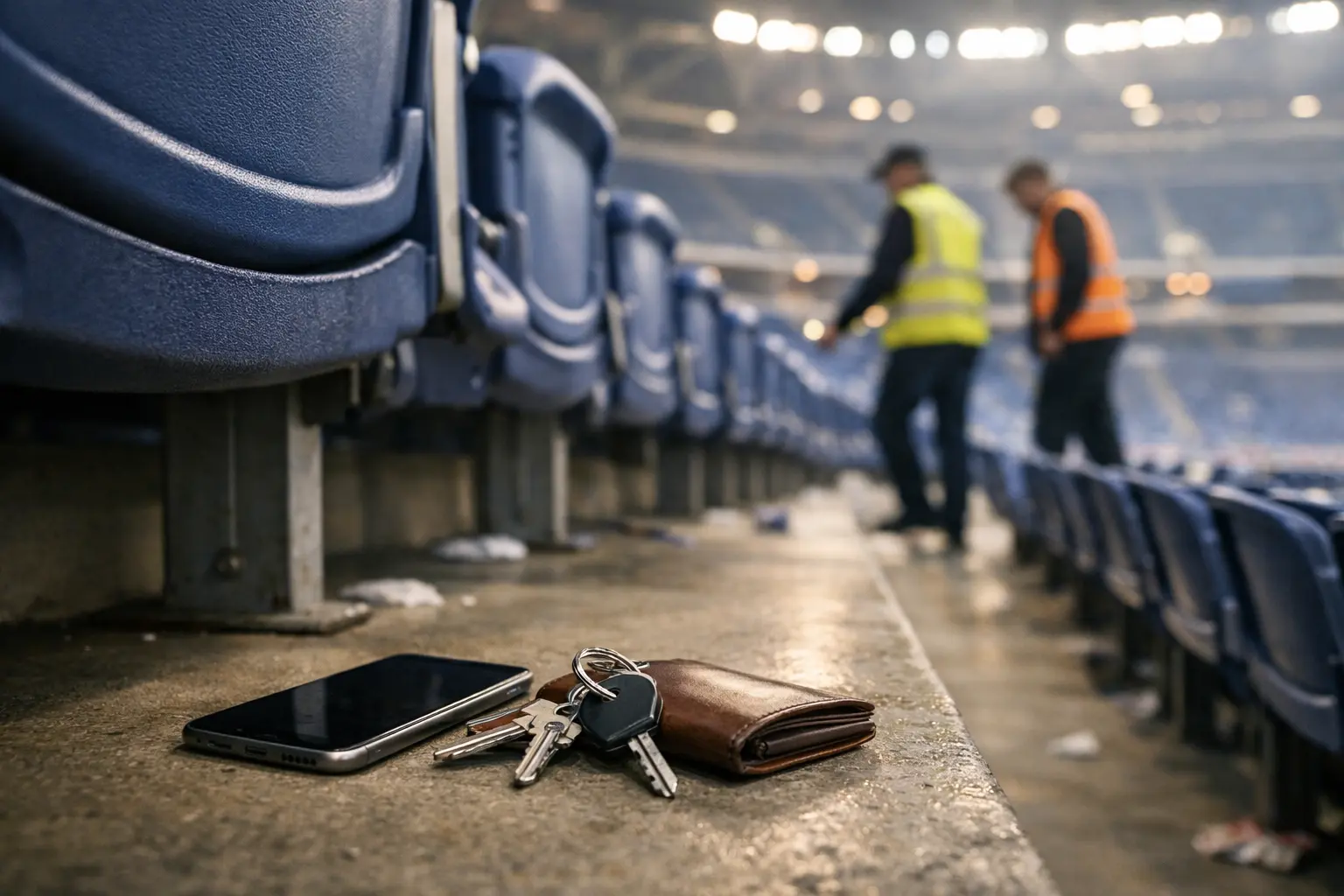
Stadium lost and found is rarely one clean desk with one clean answer.
You might have left your phone under the seat, dropped your wallet on the concourse, forgotten a bag at the security tray, left a jacket at a bar rail, misplaced keys in the toilets, or walked out of the gate without the item you set down during the second half or the encore. Some things are handed to ushers, stewards, or section staff. Some go to guest services. Some stay with security. Some sit with cleaning or event staff until the crowd clears and the venue starts its handover process.
That is why the best recovery plan is not to ask one staff member on the way out, hear “nothing yet,” and assume the item is gone. You need to work out where the item was most likely left, which team would probably have handled it first, and what details the venue actually needs in order to search.
This guide explains how lost and found at stadiums, arenas, and major event venues usually works, what to do after a match or concert, and how to improve your chances of getting the item back quickly.
Before you message the venue or start posting online, build a short timeline.
Ask yourself:
At stadiums and arenas, location matters because different teams often control different parts of the building.
For example:
If the loss just happened, use the immediate triage in What to Do in the First Hour After Losing Something Important alongside this venue-specific guide.
When the loss is recent, speed matters.
A phone dropped near your seat may still be visible before the row clears. A wallet left at a bar may still be behind the counter. A jacket left in a premium lounge may still be hanging on the chair where you left it. Once the event crowd starts moving out, items can travel through several hands very quickly.
If you notice the loss while still inside:
One accurate report plus one focused re-check is usually more effective than wandering around the entire venue without a clear sequence.
“I lost it at the stadium” or “somewhere at the concert” is too broad to help much.
Instead, rebuild the event as a sequence:
Useful anchors include:
Good examples:
That level of detail helps venue staff work out whether they should search a seating section, guest-services desk, security team, bar, or cleaning handover first.
Different parts of a stadium or arena often have different first hand-in points.
If you think the item was left at your seat or in the stands:
If you think it was left on the concourse:
If you think it was left at security or the gate:
If you think it was left at a bar, food stand, or merchandise counter:
If you think it was left in a club lounge, suite, or hospitality area:
If you think it was lost on the way out:
The clearer you route the question, the less likely you are to hear a generic “nothing has been handed in” answer that only reflects one desk.
Stadium lost property often goes through a delay between discovery and formal logging.
An item can be safe without appearing in the system yet.
That happens because:
If you lost the item during the event:
If you only notice after getting home:
Timing matters especially for phones, wallets, keys, bags, glasses, and jewellery because they are easy to move and easy to misclassify during cleanup.
Not every event loss has the same urgency.
If the missing item is a phone:
Use Lost Your Phone? Exact Steps to Take Before Someone Else Finds It for the full sequence.
If the missing item is a wallet:
Use What to Do If You Lost Your Wallet: A Step-by-Step Recovery Guide for that workflow.
If the missing item is keys, a car fob, or an access pass:
The key-specific recovery steps are in Lost Your Keys? How to Recover Them Safely Without Compromising Security.
If the missing item is a bag:
Large venues handle huge volumes of similar property.
“I lost my black phone at the concert” is weak.
A useful stadium or arena lost-property report should include:
Useful examples:
Keep some proof private.
Do not include every unique identifier in the first message. Save some details for ownership checks later. If you need help with that, use How to Prove an Item Is Yours When Someone Finds It.
If the venue asks for a written report and you need a stronger format, use How to File a Lost Item Report That Actually Helps People Find Your Stuff.
Finding the item is only half the process.
Venues often need to confirm ownership, explain where the item is being held, and tell you how long it will stay there. Some valuables go to security. Some lower-value items stay in a general lost-property room. Some event items are only released during business hours even if the event ended late at night.
Ask:
That matters especially for phones, wallets, keys, prescription glasses, and bags that people need back quickly.
Use something like this:
“Hi, I attended the concert at your venue last night and I think I may have left a black iPhone in a navy case either under my seat in Section 118 Row K Seat 9 or at the bar just outside that section around 9:30 to 9:45 pm. Could you check whether anything matching that has been handed to guest services, security, or the cleaning team for that block, and let me know the best way to confirm ownership if it has been found?”
That works because it includes:
At large events, precise routing usually matters more than repeated vague follow-ups.
Who should I ask first if I lose something at a stadium or concert?
Usually the nearest usher, steward, or guest-services desk first, plus the exact stand, bar, security lane, or hospitality team closest to where the item was probably left.
Should I go back to my seat or straight to guest services?
If the loss is recent and the area is still accessible, check the exact seat or stand location first and alert the nearest staff member at the same time. That gives you the best chance before the item moves into the handover process.
What if I only realise the item is missing after I get home?
Report it anyway. Use the event name, date, gate, section, row, seat, and the first place you noticed it missing. That still gives the venue something concrete to check against post-event sweep records.
Do stadiums keep all lost property in one place?
Not always. Security, hospitality, concessions, and cleaning teams may all feed items into the process at different times, so a delay between discovery and logging is normal.
What should I do if I found someone else’s phone, wallet, or keys at an event?
Hand it to venue staff rather than leaving it on a seat or posting identifiable details publicly. For the safer finder-side process, use Found a Phone, Wallet, or Keys? How to Return It Safely.
How is this different from losing something at a festival?
Festivals often have more spread-out, temporary hand-in points across campsites, stages, and transport links. If that is your situation, use Lost and Found at Festivals: What to Do If You Lose Your Phone, Wallet, or Bag.
If you lose something at a stadium, arena, or concert venue, do these in order:
Stadium and concert recoveries usually depend less on luck than on whether the right team gets a precise report quickly. If you can name the event, gate, section, row, seat, and likely hand-in point, you give venue staff a real chance to find the item fast.
Whether you've lost a cherished item or found something that belongs to someone else, posting an ad on lostandfound.io can help reunite items with their owners. It's free and easy to do.
Post a FREE ad