Lost and Found at Hotels: How to Recover Items Left Behind

Kevin Hall
Apr 2nd, 2026
·9min read
Apr 2nd, 2026
·9min read
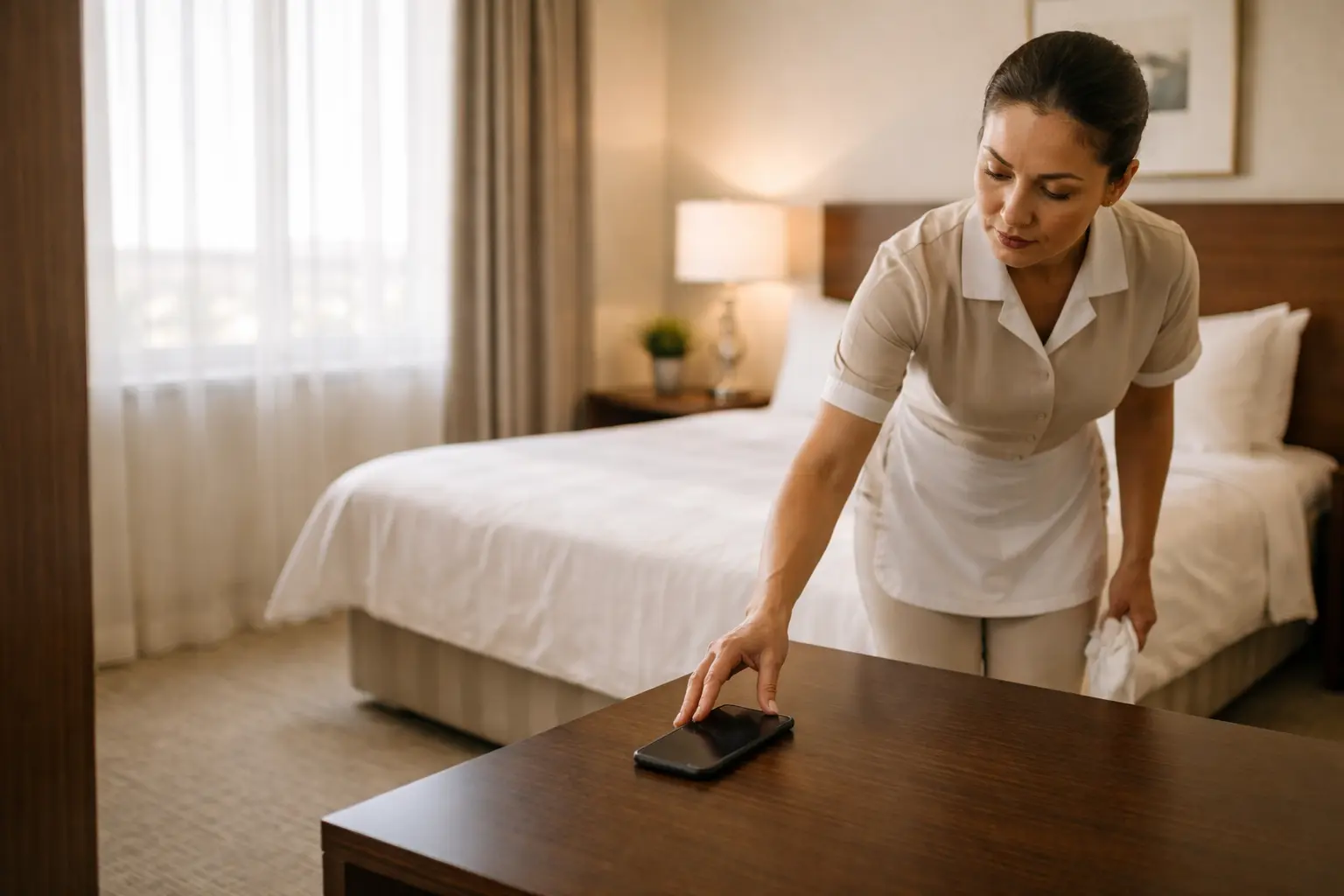
Hotel lost and found sounds simple until you realise the hotel may not treat every missing item the same way.
You might have left something in the room, in the safe, at breakfast, with the concierge, in the bar, at the pool, in the spa, in a meeting room, in valet parking, or on an airport shuttle run by the hotel. Some items go straight to reception, some stay with housekeeping for a while, some are logged by security, and some never reach a central lost-property process until the next shift.
That is why the best recovery plan is not just to call the front desk once and ask, “Has anyone found my charger?” You need to work out where the item most likely got left behind, contact the right team quickly, and give staff a description that matches how hotel teams actually search.
This guide explains how hotel lost and found usually works, what to do if you left something behind after check-out, and how to improve your chances of recovery.
Before you start calling every number on the hotel website, build a short timeline.
Ask yourself:
At hotels, the likely location matters because the hand-in path often depends on the department.
For example:
If the loss happened during travel, use the general triage in What to Do in the First Hour After Losing Something Important alongside this hotel-specific guide.
Speed matters because hotel items often change hands fast.
A passport left in the room may be seen by housekeeping after check-out. A watch left at breakfast may be held by restaurant staff before it reaches reception. A laptop charger found in a meeting room may sit with events staff until the next handover. If you call early enough, the item may still be close to the place where it was found.
When you contact the hotel:
If the item was probably left in the room, ask whether housekeeping has already serviced the room and whether they can check the most likely spots before the room turns over again.
If you left the hotel only recently, call first and then follow with a short written message if the property requests it. Voice contact is often faster for same-day recovery, while written details help later if the item needs to be logged, shipped, or matched after you have gone home.
“Somewhere at the hotel” is not a useful report.
Instead, rebuild the sequence:
Useful anchors include:
Good examples:
This matters because the hotel may need to check several different teams, and each team will search differently.
Many hotel cases become harder because people report where they noticed the loss, not where the item was probably left.
Use the last confirmed use, not the later moment of discovery.
For example:
When you are already on the move, make the sequence explicit:
That helps hotel staff decide whether they should search the room, front desk, restaurant, laundry, or transport handoff first.
If the travel day also involved an airport, the routing advice in Lost and Found at Airports: Best Steps Before and After You Fly becomes relevant once you have ruled out the hotel side.
Not every hotel loss has the same urgency.
If the missing item is a passport:
For the passport-specific recovery sequence, read Lost Your Passport While Travelling? What to Do Next.
If the missing item is a phone:
The full phone workflow is in Lost Your Phone? Exact Steps to Take Before Someone Else Finds It.
If the missing item is a wallet:
Use What to Do If You Lost Your Wallet: A Step-by-Step Recovery Guide for that sequence.
If the missing item is keys, a work laptop, medication, or an access badge:
Hotels deal with many near-identical items.
“I left my charger there” is not a strong report.
A useful hotel lost-property report should include:
Useful examples:
Keep some proof private.
Do not send full passport numbers, full card details, or every unique identifier in the first message. Save some details for later ownership checks. If you need help with that, use How to Prove an Item Is Yours When Someone Finds It.
If the hotel asks for a written report and you want a cleaner structure, use How to File a Lost Item Report That Actually Helps People Find Your Stuff.
Recovering the item is only half the process.
Hotels often need to confirm ownership, arrange collection, or ship the item back after it is found. That can introduce delays even when the hotel already has the item.
Ask:
This matters especially for passports, work devices, jewellery, and expensive electronics.
If you are arranging shipping, make sure the hotel has one stable contact method for you. Missed messages are a common reason recoveries stall.
Use something like this:
“Hi, I stayed in room 417 and checked out this morning, 2 April, at around 8:15 am. I think I may have left a black Kindle in a red case on the bedside table or desk. Could you check whether housekeeping, reception, or security has anything matching that, and let me know the best way to confirm ownership if it has been found?”
That works because it includes:
Hotels run on handovers. Precise timing and precise routing usually matter more than repeated vague follow-ups.
Who should I call first if I left something in a hotel?
Usually the hotel property directly, then the team most likely to have handled the item, such as reception, housekeeping, security, or concierge. A central reservations number is often the slowest route.
How long does hotel lost and found take?
Sometimes items are found and confirmed the same day. In other cases, they are only logged after housekeeping rounds, shift changes, or security handover. Fast contact helps because the item may still be near the original location.
What if I think the item was left in the hotel laundry or bedding?
Say that clearly in your report. Hotels may need housekeeping or laundry staff to check linen, towels, robes, or laundry bags before the item can be ruled out.
What if I only realise after I have reached the airport or gone home?
Report it anyway, but explain exactly where you last had it and when you checked out. The later you notice, the more important a precise timeline becomes.
Who pays to ship a found item back to me?
That depends on the hotel policy. Some hotels will help arrange a courier at your cost, while others only support in-person collection or third-party pickup.
If you leave something behind at a hotel, do these in order:
Hotel recoveries are usually less about calling more people and more about routing the search properly. If the right hotel team gets a specific report early, your chances improve a lot.
Whether you've lost a cherished item or found something that belongs to someone else, posting an ad on lostandfound.io can help reunite items with their owners. It's free and easy to do.
Post a FREE ad